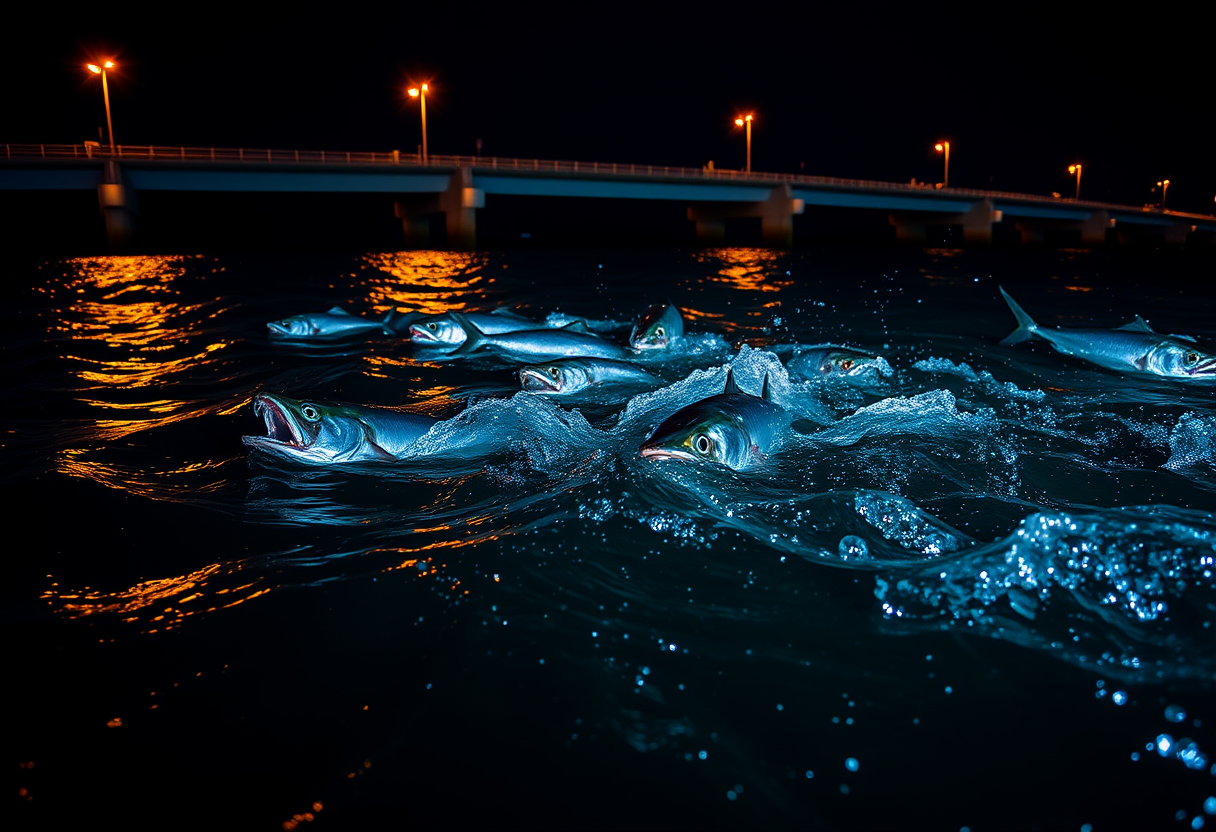
Bridge lights do the work that chum can’t. Bait concentrates in the current seam at the edge of the light, and tarpon stack up underneath to feed — visible, rolling, and aggressive in a way they rarely are under a midday sun.
Night tarpon fishing around structure is a different discipline than daylight sight-casting on the flats. The fish are close, the current is often ripping, and the structure that’s holding the bait is also exactly what a hooked tarpon will use to break you off.
Reading the Light Line
Position the boat up-current of a bridge or dock light and drift baits or lures through the seam where lit water meets shadow — that edge is where tarpon sit, using the light to spot bait without being fully exposed themselves. Live shrimp, small crabs, or soft-plastic swimbaits worked through the seam draw strikes that a bait sitting in full light or full shadow won’t.
The Rig
Structure fishing means heavy leader is not optional. Run 40-60lb braid main line to 60-100lb fluorocarbon leader — heavier than you’d use on open-water tarpon, because the fight here is decided in the first ten seconds, not the next thirty minutes. A tarpon that gets a wrap around a piling on light leader is gone; on heavy leader you at least have a chance to turn it.
Fight Discipline
The strike is often violent — tarpon under lights feed aggressively and the hookset can nearly take the rod out of your hands. The instant it’s hooked, the fight is about position, not patience: get the boat moving away from the structure immediately, applying steady side pressure to pull the fish’s head away from pilings before it can wrap.
A fighting harness matters more here than the open-water version of this fight — you need both hands free to work the boat and the rod simultaneously in the critical first thirty seconds.
What Kills This Rig
Light leader “for sport.” A tarpon that wraps a piling on 30lb leader is a lost fish and often a lost rig. Go heavier than feels necessary.
Fighting from a fixed position. Structure fishing at night requires the boat to move with the fish, pulling it away from pilings — a stationary fight near structure is a losing fight.
Slack on the initial run. The first ten seconds decide this fight. Firm drag and full attention from the strike, not after.