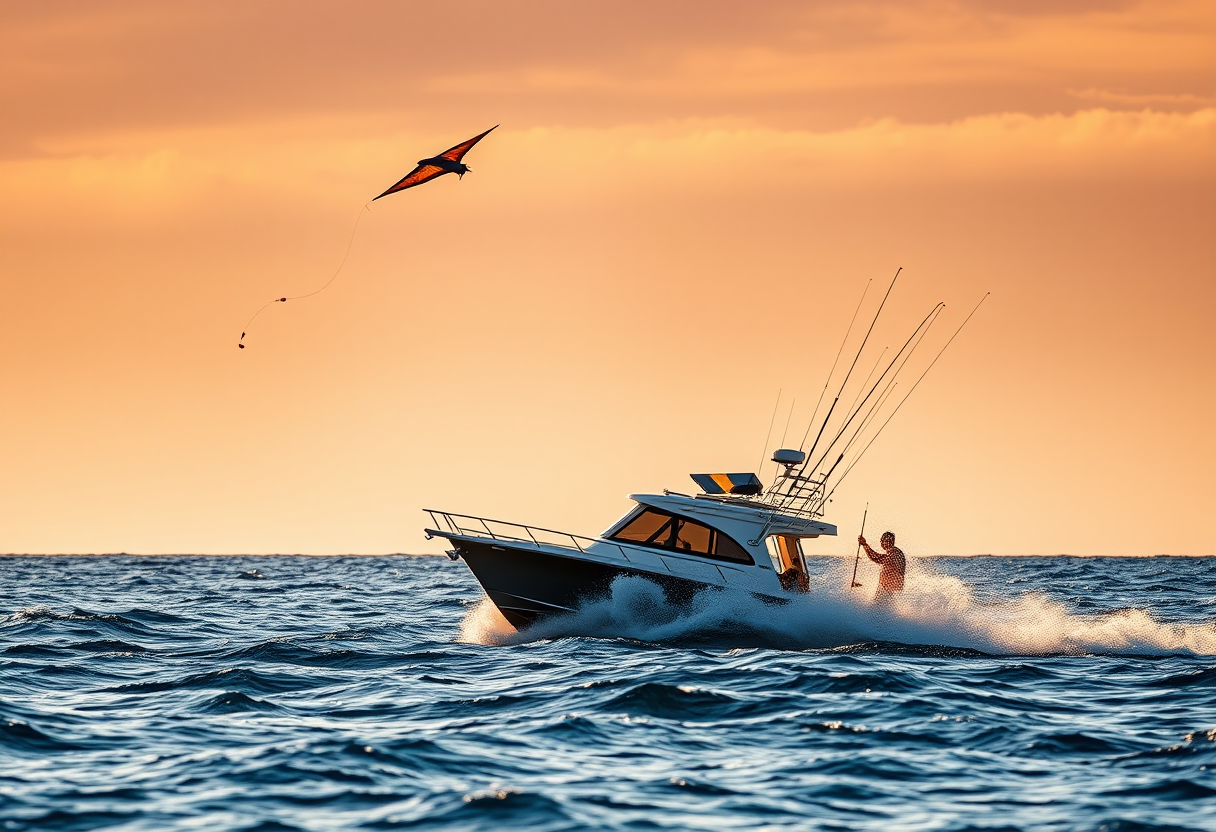
A kite spread is only as good as its weakest release clip. Everything else — the kite itself, the line, the boat positioning — exists to put a bait on the surface where sailfish and mahi actually hunt, and the clip is what decides whether the bait presents naturally or drags dead in the water.
What We’re Looking For
A kite rated for real offshore wind. Cheap kites sag or fold in gusts past 15 knots. A kite built for offshore use holds altitude through the range you’ll actually fish in.
Tunable release tension. Not all clips adjust the same way — you want fine control, because the right tension is the difference between a hookup and a dropped bait, and it changes with sea state.
Multiple clip stations. Running two baits off one kite doubles your spread without a second kite in the air — worth having a kit built for it from the start.
Our Picks
The complete kite fishing kit gets a new crew flying and fishing without piecing parts together from three different vendors. Once you’re running kites regularly, stock spare release clips separately — they’re the small part most likely to fail or get lost overboard mid-season, and running out mid-trip means running one less bait than you should be.
See the full breakdown of the technique in Kite Fishing Sailfish and Mahi.